
Myopia Management vs. Standard Glasses: Is It Time to Invest in Your Child’s Long-Term Vision?
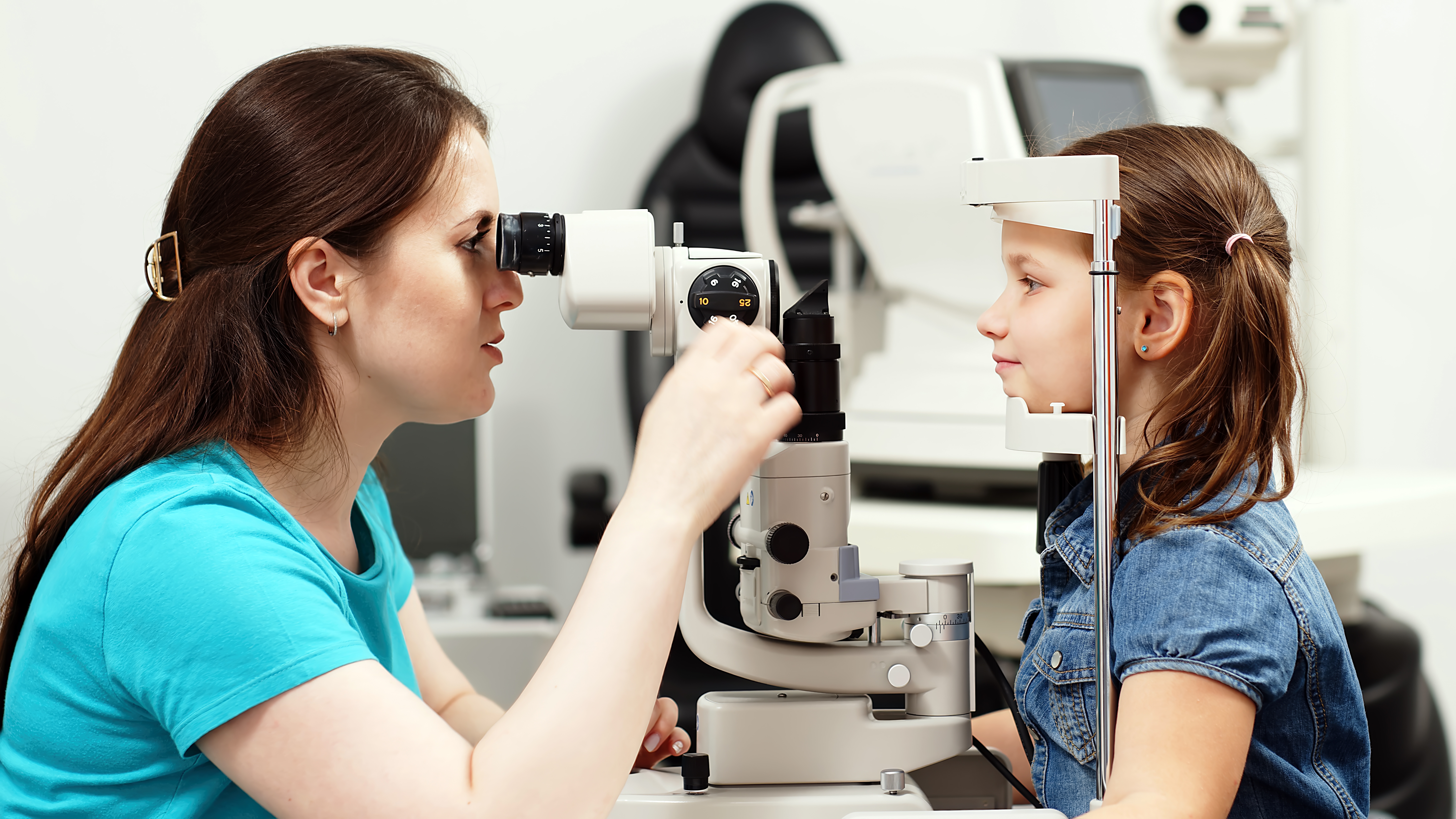
When your child becomes more nearsighted, updating their glasses prescription helps them see clearly again. But if that prescription keeps getting stronger, Elgin parents may want to consider a different question: Is simply correcting blurry vision enough, or should we also try to slow myopia progression?
At Radiant Eye Care, myopia management focuses on protecting a child’s long-term vision while continuing to provide the clear sight they need for school, sports, and everyday activities.
What Do Standard Glasses Do for Myopia?
Standard single-vision glasses correct nearsightedness by helping distant objects appear clear. They are an effective and familiar form of vision correction, but ordinary single-vision glasses generally do not slow the underlying progression of childhood myopia.
That distinction matters because myopia often increases while a child’s eyes are still growing. If your child needs a stronger prescription year after year, simply replacing their glasses continues correcting the blur without directly addressing how quickly the nearsightedness is progressing.
How Is Myopia Management Different?
Myopia management uses specialized treatments designed to reduce the rate at which childhood nearsightedness progresses.
Depending on a child’s age, prescription, eye health, and lifestyle, options may include:
Specialized myopia control glasses such as Stellest lenses
Orthokeratology, or Ortho-K, worn overnight
Specially designed daytime contact lenses
Low-dose atropine eye drops
Regular monitoring of prescription changes and eye growth
No treatment can guarantee that myopia will stop progressing completely. The goal is to slow progression compared with what might otherwise occur.
Why Does Slowing Myopia Matter?
Myopia is more than an inconvenience that requires stronger glasses. Higher levels of nearsightedness are associated with greater lifetime risks of certain eye conditions, including retinal detachment, glaucoma, cataracts, and myopic macular degeneration.
That does not mean every child with myopia will develop these problems. It does mean that limiting how high the prescription becomes may have benefits that extend beyond childhood.
For Elgin families, this is why myopia management can be viewed as a long-term eye health strategy rather than simply another type of prescription.
What Are Stellest Lenses?
Stellest lenses look much like regular eyeglasses but use a specialized optical design to correct vision while helping slow myopia progression. In the United States, FDA authorization covers treatment initiation in children ages 6 through 12 who meet the appropriate prescription and eye health criteria.
For children who prefer glasses or are not ready to manage contact lenses, this can provide a familiar way to incorporate myopia control into everyday life.
What About Ortho-K and Atropine?
Ortho-K uses custom rigid contact lenses worn while sleeping. The lenses temporarily reshape the cornea so many patients can see clearly during the day without glasses or daytime contacts. The effect is reversible and generally requires continued overnight wear. Using Ortho-K specifically to slow myopia progression is considered off-label in the United States.
Low-dose atropine is another commonly used option. These prescription eye drops can slow progression in some children, although response varies. Atropine for myopia management is also an off-label use in the United States and does not replace glasses or contacts needed for clear distance vision.
When Should Elgin Parents Consider Myopia Management?
If your child’s prescription continues getting stronger, they started becoming nearsighted at a young age, or there is significant myopia in the family, it may be worth discussing active myopia management.
Regular monitoring is an important part of the process. Measuring prescription changes and, when appropriate, axial length can help determine whether treatment is working or needs adjustment.
Outdoor time and regular breaks during prolonged near work can support healthy visual habits, but they do not replace prescribed myopia treatment when it is recommended.
If your child’s nearsightedness continues to progress, contact Radiant Eye Care at 3091 US-20 #105, Elgin, IL 60124 by calling (847) 874-2020 to schedule a myopia management evaluation and discuss options for protecting your child’s long-term vision.
All Eye
Care Services

Keep
In Touch
MAP
Powered by: 